Vision & sensing
Vision Inspection on the Production Line: What a Camera Can Check
Manual inspection works until the line speeds up, the shift gets long or the defect is too small to see at a glance. A vision system checks every part in the same way, every time, and turns the result into a simple pass/fail signal your line can act on. Here is how it works, what it can check and what to prepare before you add one.
How a vision system works
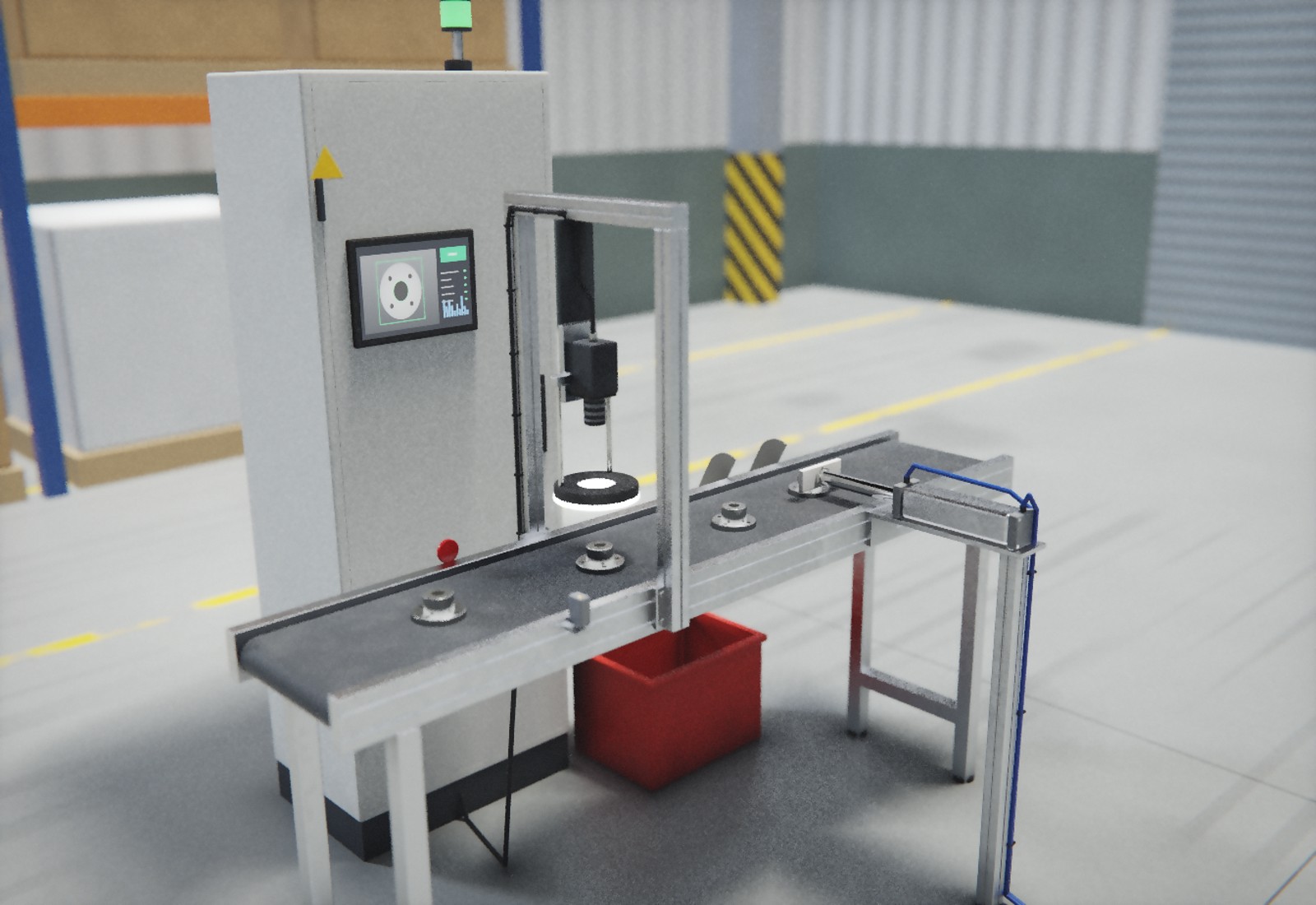
A sensor detects that a part has arrived and triggers the camera. The camera captures an image under controlled lighting, the inspection software measures or compares what it sees, and the result goes to the PLC as a pass or fail. The PLC then lets the part continue, stops the line or diverts the part to a reject lane.
- Camera and lens sized for the part and the smallest detail you need to see.
- Lighting that makes the feature or defect stand out clearly.
- Inspection software that measures, compares or reads the image.
- A trigger and an output wired into your line’s controls.
What a camera can check
| Check | What it looks for | Typical use |
|---|---|---|
| Presence check | Is every component fitted? | Assemblies, kits, caps and clips |
| Dimension check | Are key features within tolerance? | Machined and moulded parts |
| Defect detection | Scratches, dents and misprints | Surfaces, labels and packaging |
| Code reading | Barcodes, QR codes and printed text | Traceability and labelling |
Lighting matters as much as the camera
Most inspection problems are lighting problems. The goal is to make the feature you care about look the same on every image, whatever the time of day or the condition of the part.
- Backlighting shows a sharp silhouette, which suits outlines and dimensions.
- Diffuse lighting reduces glare on shiny or curved parts.
- Low-angle lighting picks up scratches, dents and embossed text.
- Enclosures or shrouds keep changing ambient light out of the image.
Connecting the result to your line
A vision system is only useful if the line acts on its result. The pass/fail signal goes to the PLC, which can stop the conveyor, raise an alarm on the HMI or trigger a diverter that moves faulty parts to a reject lane. Results can also be logged for traceability, and codes read by the camera can be matched against the order being produced.
What to prepare before you start
- Sample parts, both good and faulty, including borderline cases.
- A clear definition of what counts as a defect and what does not.
- The line speed and how parts are presented to the camera.
- Where a rejected part should go and who needs to know about it.
Vision systems fit new lines and can also be retrofitted onto existing machines, so inspection does not have to wait for the next line build.
How we approach it
We build vision inspection into new lines and retrofit it onto existing machines, from camera and lighting selection to the pass/fail signal into your PLC and the reject handling around it.
Written by