Machine safety
Machine Safety Basics: Guarding, Light Curtains and Interlocks
Automation removes people from repetitive work, but people still load parts, clear jams and maintain machines. Machine safety makes sure they can do that without being exposed to moving parts. No single device does the job alone: guarding, interlocks, light curtains, scanners and emergency stops each cover a different situation, and a safety control system ties them together.
Start with a risk assessment
Safety measures are chosen from a risk assessment of the specific machine: who works near it, what they do there, and what could hurt them. The general principles are set out in ISO 12100, and the outcome decides which of the measures below a station needs.
Fixed guarding and safety fencing
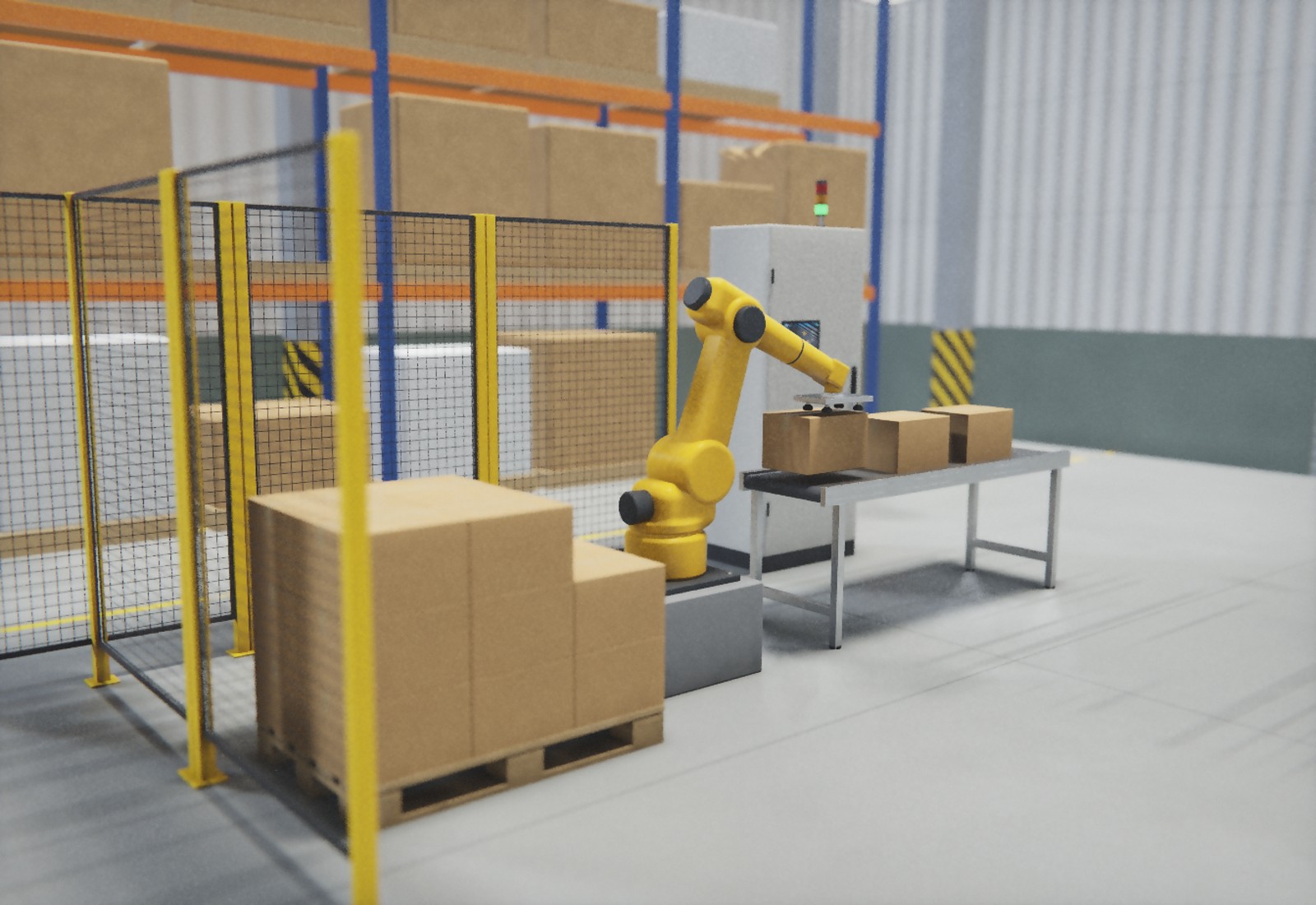
Physical guarding keeps people out of areas they never need to enter while the machine runs. Mesh fencing around a robot cell is the familiar example. Fixed guards are simple and reliable, so they are usually the first choice wherever access is not needed during production.
Interlocked doors
Where people do need access, for example to clear a jam or change tooling, the door in the guarding is fitted with a safety interlock. Opening the door stops the hazardous motion, and the machine can only restart once the door is closed and the system has been reset.
Light curtains
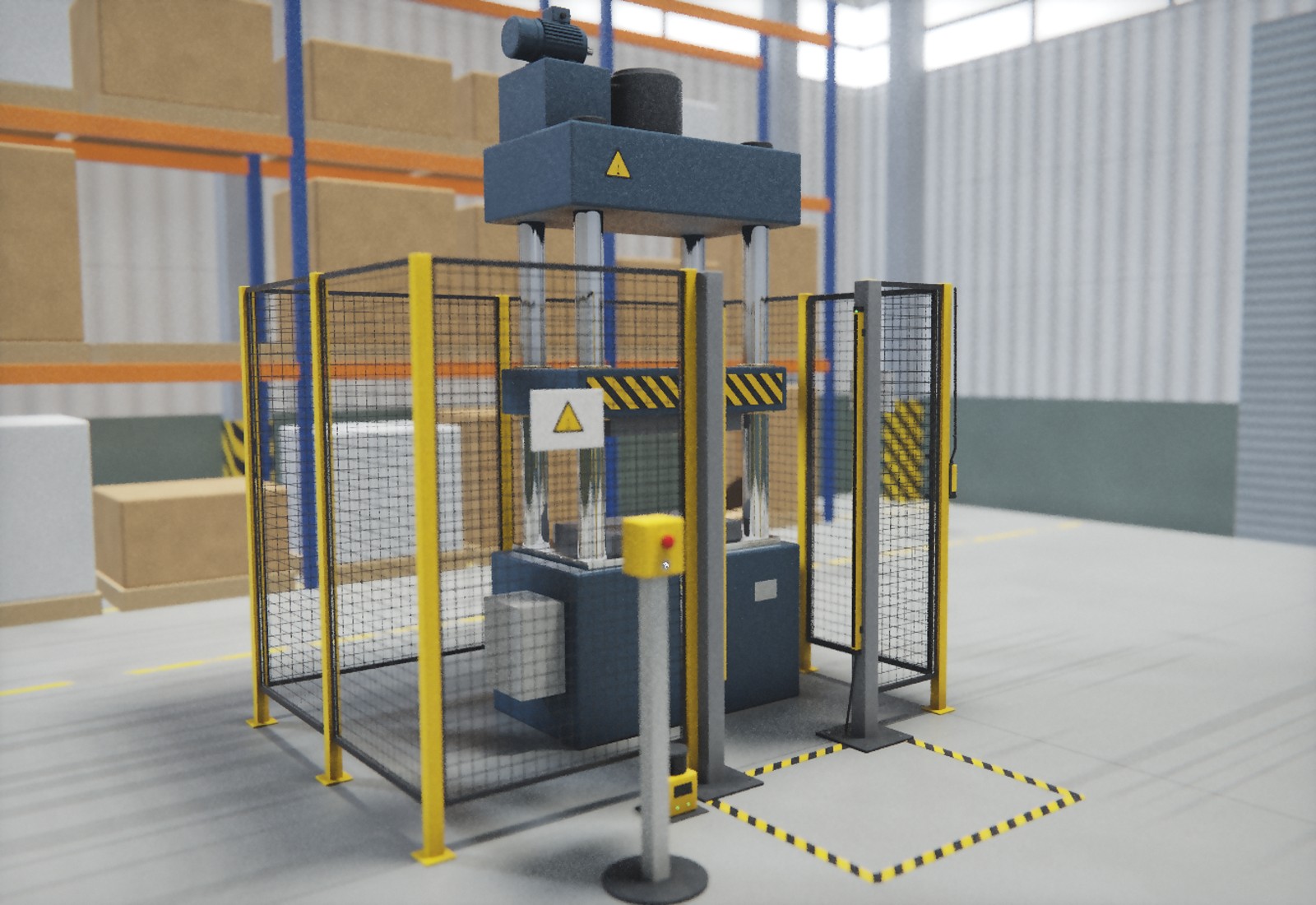
A light curtain protects an opening that operators reach through often, such as a loading station. When a hand or body breaks the beams, the machine stops. Light curtains must be mounted far enough from the hazard that motion stops before a person can reach it. That distance depends on the machine’s stopping time and on the light curtain’s response time and resolution, and is covered in ISO 13855. A light curtain only suits machines that can stop part-way through a cycle; a mechanical press with a full-revolution clutch needs a different kind of guarding.
Safety scanners
A safety laser scanner watches an area on the floor rather than a single opening. It can slow or stop a machine when someone walks into the protected zone, which suits larger cells and areas where people and machines share space.
Emergency stops and safety relays
Emergency stop buttons let anyone near the machine stop it quickly, so they need to be within easy reach of every operator position. Safety relays or safety controllers monitor the E-stops, interlocks and light curtains and switch off hazardous motion when any of them is triggered.
Which device protects what
| Device | What it protects | Typical place |
|---|---|---|
| Safety fencing | Areas with no access during production | Around robot cells and conveyors |
| Interlocked door | Access points used for jams and changeovers | Doors in the guarding |
| Light curtain | Openings operators reach through often | Loading stations |
| Safety scanner | Floor areas people may walk into | Larger cells and shared areas |
| Emergency stop | A backup way to stop the machine, not a guard | Panels, pedestals and stations |
This article is a general overview. The right combination of safety measures for a machine comes from a risk assessment carried out for that machine.
How we approach it
We supply and integrate machine safety guarding, light curtains and interlocks, together with control and safety devices such as push buttons, emergency stops and tower lights, for robot cells, presses, special purpose machines and conveyors.

Written by